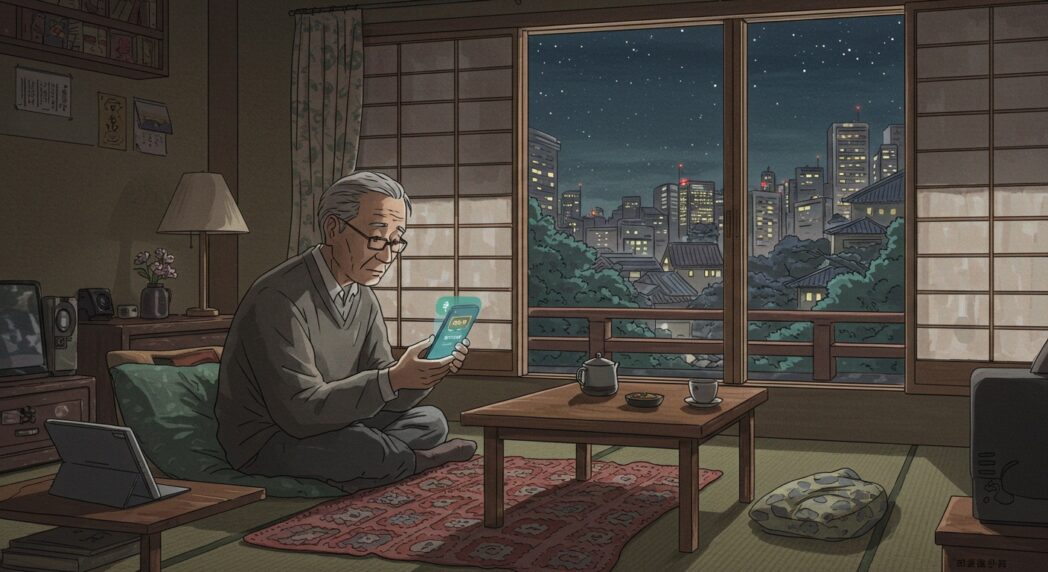
私は、新しいものを恐れる老人のひとりである。
そう宣言するにはまだ早いかもしれない年齢かもしれないが、それでも最近のOSやアプリのバージョンアップの速さには、内心、激しく戸惑いを覚えることが多い。
「なんで変えてしまうのか」
「そこに新しいボタンを付けないでほしい」
「あのアイコンはどこに行った」。
そう呟きながら、私は哀れにも画面を右往左往する指を見つめる。
昭和に生まれ、平成を走り抜け、令和という名の未来に立っている。
だがその足元は、いつの間にか見慣れない舗装材で塗られてしまったようだ。
人は、変化を恐れる生き物だ。
これは進化の過程で獲得してきた大切な本能である。
慣れ親しんだ道を歩くほうが、安全で、確実だと脳が判断する。
見知らぬ植物には手を出さない。知らない祭り言葉には耳を塞ぐ。
その慎重さが、私たちを災厄から守ってきた。
しかし今、私たちが直面しているのは、獣道でも毒草でもない。
OSやアプリという、目に見えず、手触りもない「変化」なのである。
若い頃は、変化の大波に身を投じる怖さなど知らなかった。
「アップデートが来たら即インストール」が当たり前。
新しいバージョンの鮮やかさ、新機能のきらめきにわくわくした。
UI(ユーザーインターフェース)が一新され、操作方法が変わっても、「なるほど、使いやすくなった」と素直に感じた。
だが、年を重ねるごとに、私は「新しい」を歓迎できなくなってきた。
自分の中に、昨日と同じ今日を、今日と同じ明日を求める「恒常性」が巣食っていることに気づかされる。
昨日の手触りを覚えていたい。画面の中のアイコンの位置を、祖母の編みかけの毛糸玉のように、安心して触れていたい。
恒常性とは、生命を守るための仕組みでありながら、時には新しい水を拒む頑なな杯にもなる。
例えば、OSのメジャーアップデート。
通知が届くたびに、おそるおそる指を震わせてしまう自分がいる。
システムが根本から変わったらどうしよう、今までできていたことが急にできなくなったら……。
一度「アップデート地獄」に迷い込めば、なじみの操作が消えてしまい、SNSに書かれている「ウィジェットの配置ってどうするんだ」という叫びが、まるで自分の悲鳴のように聞こえてくる。
もちろん、すべての人が変化を恐れるわけではない。
いまも好奇心の旺盛な若者たちは、新しいアプリ、新しい機能に歓声を上げるだろう。
彼らにとってはUIのモデルチェンジも、未知なる世界への冒険なのだ。
だが中高年、特にデジタルネイティブではない世代にとって、新しいバージョンは「襲来」だ。本来「便利」に進化したはずのサービスに、逆に「不便」を感じてしまう。それは一種の時差ボケにも似ている。
未来の街に突然放り込まれ、標識の意味も読み取れない旅人のような心細さが付きまとう。
変化を拒み、現状維持を望むのは、本能であり、同時に人間らしさでもある。
だが、この変化の激しい時代、どうにかしてついていかなければならないのもまた事実だ。
昔なら、家の電話のダイヤルをひとつ回す手が慣れれば充分だった。
しかし今や、情報の波は引きも切らず押し寄せ、昨日便利だったものが今日には使えなくなる。
真夜中、気がつけばスマートフォンを握りしめて「アップデートは後で」と何度もボタンを押してしまう私は、年老いた親と同じ驚きと不安の中にいる。
本当に望むのは、今ある使い勝手のまま進化していくこと。
けれど、技術の進歩の波は、私たち個人の都合などおかまいなしに進む。
もはや選択肢は、「ついていく」か、あるいは「置いていかれる」かの二択しかないようにも思える。
不服や戸惑いを抱えながら、それでも、私は今日もまたアップデートの通知を見つめている。
心のどこかで「明日も今日と同じであってほしい」と願いながら。
だが、変化はやがてすべての人に訪れる。
OSやアプリの世界に限らず、身の回りの景色も、出会う人も、そして自分の心さえも―昨日のままではいられない。
恒常性と、変化。
それを行き来するうちに、私たちはいささか不器用な「進化」を手にしてゆくのかもしれない。
変化の波にのまれても、「変わらない悲しみ」と「変わっていく厳しさ」の間で揺れること、それこそが人として生きるということなのだろう。
私は今日も、新しいアップデートの通知を指で払う。
今はまだ、古いままでいたいと思いながら。
だが、明日にはきっと、勇気を出して「今すぐアップデート」を選ぶ自分がいるかもしれない。そしてまた、少しだけ時代の流れに、身を委ねてみようかと――そんな風に思っている。
“The Elderly Who Can’t Keep Up with OS and App Updates”
I am one of those elderly people who fears the new. It might be too early for me to boldly declare that, given my age, but lately, the speed of OS and app updates has left me secretly bewildered. “Why do they have to change things?” “Please don’t add that new button.” “Where did that icon go?” Muttering like this, I pitifully watch my fingers fumble across the screen. Born in the Showa era, sprinting through Heisei, and now standing in the so-called future of Reiwa, I find the ground beneath my feet quietly resurfaced with unfamiliar materials.
People are creatures who fear change. It’s a fundamental instinct, acquired over the course of evolution. Our brains judge it safer and more certain to walk familiar paths. Don’t touch unknown plants. Close your ears to unfamiliar phrases. This caution has saved us from disaster time and time again. But the challenge before us now isn’t a beast’s path or poisonous flora—it’s the intangible, tasteless “change” of OS and apps.
In my younger days, I knew nothing of the fear of plunging into the waves of change. “Update instantly when a notification arrives” was the obvious choice. I would get excited by the vividness and shine of new versions and features. Even if the user interface was totally overhauled, I’d straightforwardly think, “Well, this is easier to use.” But as I’ve grown older, welcoming the “new” has become harder. I notice in myself the desire for today to be just like yesterday, for tomorrow to be just like today—a sense of “homeostasis.” I want to remember the feel of yesterday. I want to reach safely for my icons on the screen, as if reassured by my grandma’s half-knitted ball of yarn.
Homeostasis is a mechanism for protecting life, yet sometimes it becomes a stubborn cup refusing new water. Take, for instance, a major OS update. Every time I get a notification, my finger trembles in fear. What if something fundamental changes? What if I suddenly can’t do what I used to do? If I get lost in “update hell,” I lose my familiar operations and hear others’ cries—“How do I arrange widgets?”—echoing my own despair.
Of course, not everyone fears change. Curious young people still cheer for new apps and features. For them, a user interface overhaul is an adventure into the unknown. But for those of us in middle age and older—especially those not born as digital natives—new versions feel like an invasion. Services supposed to become “more convenient” end up feeling inconvenient. It’s like jet lag: we’re thrown into a future city where we can’t even read the signs and are left feeling helpless.
Resisting change and desiring the status quo is both instinct and a deeply human trait. Yet, in this era of rapid change, we must somehow keep up. In days gone by, just getting used to dialing a home phone was enough. Now, waves of information never stop coming, and what was convenient yesterday can become unusable today. Late at night, I catch myself gripping my smartphone and tapping “Later” to delay updates again and again, sharing my aging parents’ feelings of surprise and anxiety.
What I truly wish for is progress that keeps its usability. But the wave of technological advancement moves on, ignoring our individual wishes. It sometimes feels like we have only two choices: keep up, or be left behind. Bearing grumbles and dismay, today again I stare at the update notification, silently hoping “Let tomorrow be just like today.”
Yet, change comes for all of us, eventually. Not just in OS and apps, but in our surroundings, our relationships, and even ourselves—nothing stays the same as yesterday. Homeostasis and change: as we move back and forth between them, perhaps we imperfectly gain our own sort of “evolution.” Even swallowed by waves of change, wavering between “the sorrow of sameness” and “the hardship of transformation”—that might be what it means to be human.
Today again, I swipe away the update notification, hoping to stay with the old ways a bit longer. Yet perhaps, tomorrow, I’ll gather my courage and hit “Update Now,” surrendering myself just a little to the flow of the times. That’s what I find myself thinking.